The role of trust in a world of AI-native law firms
Ahmet Kilicaslan · May 27, 2026 · 5 min read

The Wolters Kluwer 2026 Future Ready Lawyer Survey found AI embedded in 92% of legal teams' daily workflows. The headline finding, though, wasn't about productivity. It was about trust.
That tells you everything about where the legal industry is right now.
The technology is no longer the bottleneck. AI tools have moved from experimental to ubiquitous in under three years. What's holding the industry back, and what will decide which firms emerge as the winners of this transition, isn't whether you can deploy AI. It's whether your clients can trust what comes out the other side.
Where trust actually comes from
When we look at the firms genuinely succeeding with AI, not just experimenting, but running their core practice on it, a consistent pattern emerges. Trust isn't a feeling clients arrive with. It's something firms have to earn through structural choices.
Three of those choices matter most.
Humans stay in the loop
AI outputs need to be reviewed through sound legal reasoning and ethical judgment by a human, in the loop, or at least on it. The numbers back this up. Leading AI-native firms are now reviewing tens of thousands of contracts with turnaround times under an hour, while their lawyers earn significantly more than they would at traditional practices. The AI carries the volume. The professional carries the judgment. Both are needed.
Transparency is traceable
A consistent lesson from AI adoption across European legal markets: technology only gets used if it can be trusted, and it can only be trusted if its outputs trace back to their sources. Court opinions. Statutes. Secondary sources. Real authors. Lawyers need to be able to back their arguments with real authority, not generated confidence. This isn't a nice-to-have. It's the precondition for adoption.
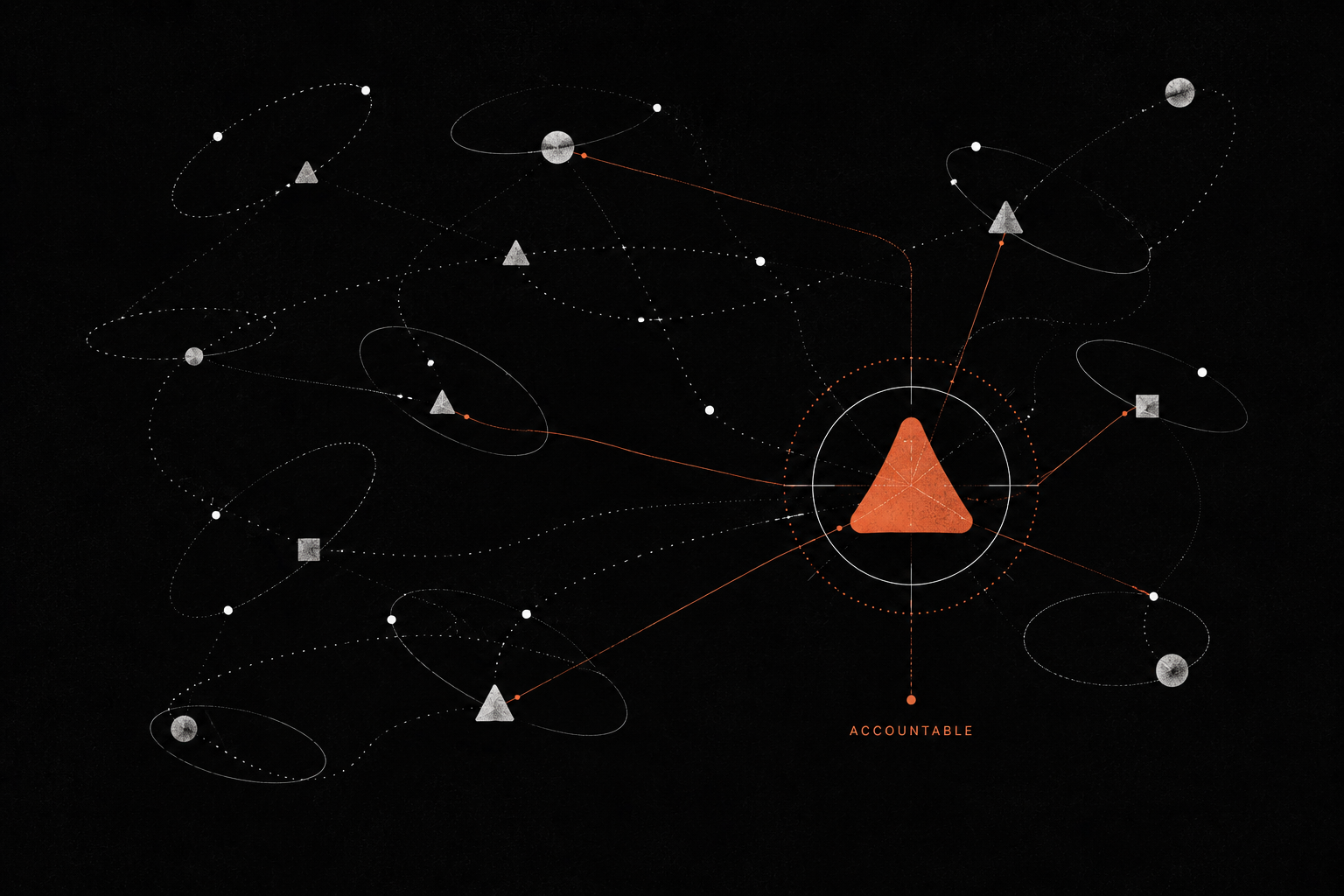
Accountability is built in, not bolted on
The firms winning right now aren't just deploying AI. They're redesigning how accountability works: who checks what, how it's documented, and how clients can verify that someone with real credentials stood behind the output. When something goes wrong, it has to be clear who is responsible and how it gets fixed. Without that, AI is just a faster way to make mistakes.
Why this matters more in legal than anywhere else
In most industries, the cost of an AI error is annoyance or rework. In legal, the cost can be a missed compliance deadline, a fine, a botched termination that ends up in court, or a contract clause that exposes a business to liability it didn't see coming.
Generic AI tools are particularly dangerous in legal contexts because they don't fail loudly. They fail confidently. A hallucinated citation looks identical to a real one. An invented statute reads like a real statute. A wrong answer to a Kündigungsschutzgesetz question can sound exactly as authoritative as the right one.
That's why purpose-built legal technology matters. Not because generic AI can't write words. It can. But because the legal profession requires a level of verification and accountability that general-purpose models weren't designed for.
What this means going forward
The law firms winning right now aren't just deploying AI. They're redesigning how accountability works. Trust, in this sense, becomes the product. The AI is the margin.
For legal professionals navigating this shift, the question isn't whether to adopt AI. It's whether the culture, the training, and the oversight structures are in place to make that adoption something clients can actually rely on.
For businesses choosing a legal partner, the question is parallel: how does the firm verify what its AI produces? Who signs off? Where does accountability sit when something goes wrong?
The firms that answer those questions well won't just be trusted. They'll be the ones left standing.
How we think about this at nu:legal
This is the core of why we built nu:legal the way we did. Our technology handles routine legal work in hours instead of weeks. Every workflow on the platform is co-developed with expert lawyers, every output is benchmarked against the alternative, and for higher-stakes work, a practicing lawyer reviews and confirms the result in 24 hours with their name and license behind it.
That's not a hedge against AI. It's how we think trust should work in a world where AI is everywhere.